chiragag12@gmail.com

chiragag12@gmail.com

Opinion Is Not Knowledge

In an age of social media and instant judgments, opinions are everywhere - but knowledge demands more than confidence. Explore the difference between opinion and knowledge through reason, evidence, and the Indian tradition of Nyāya.

क्या हर “त्योहार” वास्तव में त्योहार ही है?

हम दीपावली, एकादशी, महाशिवरात्रि और अनेक अन्य अवसरों को सामान्यतः "त्योहार" कह देते हैं। लेकिन शास्त्र ऐसा नहीं करते। सनातन परंपरा में पर्व, व्रत और उत्सव तीन अलग-अलग अवधारणाएँ हैं, जिनका उद्देश्य समय, अनुशासन और आंतरिक परिवर्तन को समझना है। आइए जानें कि इन तीनों में वास्तविक अंतर क्या है और क्यों इस अंतर को समझना आवश्यक है।

Why Are There So Many Gods in Sanātana Dharma?

Why does Sanātana Dharma appear to have so many Gods? Does it teach polytheism, or is there a deeper philosophical foundation behind its many deities? This article explores what the Vedas, Upaniṣads, and Bhagavad Gītā actually say about the nature of the Divine, the meaning of Deva, and why one Supreme Reality is approached through many names, forms, and symbols. By returning to the primary Śāstric sources, we discover that what seems like plurality is rooted in a profound vision of unity.

Why Asking for a Minister’s Resignation Still Matters

After the NEET controversy, many argued that fixing the system is more important than seeking a minister's resignation. While systemic reform is essential, accountability is equally important. This note explains why ministerial responsibility and institutional reform are complementary pillars of a healthy democracy.

When Influence Becomes Responsibility

Every citizen has the legal right to remain silent. But should public figures with millions of followers be held to a higher moral standard? This essay explores the difference between legal rights and moral responsibility, asking whether influence itself creates an obligation to stand with society during moments that define a generation.

How Governments Should Respond to Student Protests | Democracy & Accountability

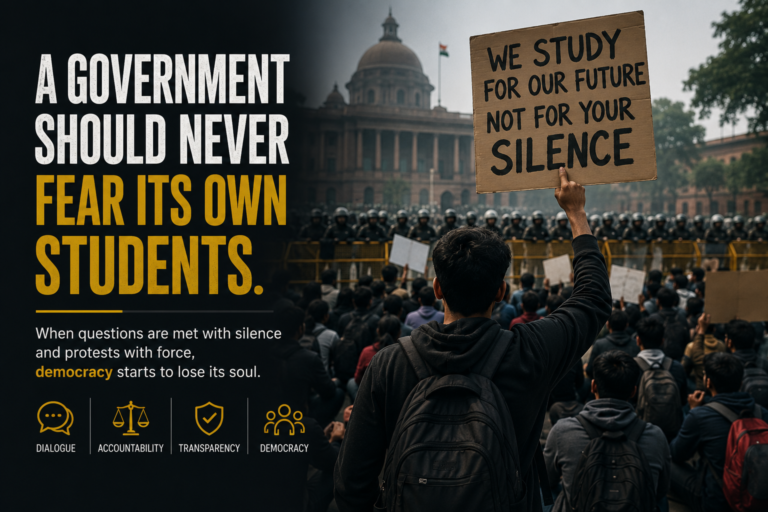
A democracy is not tested when everything is peaceful - it is tested when its own citizens demand accountability. When students spend years sacrificing for their future and then take to the streets seeking answers, the government's greatest responsibility is not merely to maintain order, but to protect public trust. Dialogue builds confidence. Accountability strengthens institutions. Force, however, can never answer the questions that brought people there in the first place.

When a Nation’s Brightest Minds Begin to Lose Faith

For millions of students, success is built on years of sacrifice - missed celebrations, sleepless nights, and unwavering faith that hard work will be rewarded fairly. But when controversies surrounding public examinations shake that trust and accountability becomes a political debate instead of an institutional priority, the consequences extend far beyond a single examination. A nation's greatest loss is not merely a compromised system - it is a generation beginning to question whether the institutions they trusted are worthy of their faith.

Why Smart People Still Fall for Misinformation

Why do intelligent people still fall for misinformation despite having unlimited access to information? The answer lies not in a lack of intelligence, but in the psychology of belief. Explore how repetition, emotion, confirmation bias, and social media shape what we accept as truth - and how to think more critically in an age of information overload.